I got a cold email last week that made me stop scrolling. It wasn't fancy. No clever subject line trick, no "hope this finds you well." The person had clearly looked at our website, noticed something specific, and written three sentences about why it mattered to them. I replied within an hour.
I also got 40 other cold emails that week. I don't remember any of them. That's the whole game right there.
The Problem Isn't Cold Email — It's Lazy Cold Email
People love to say cold email is dead. It's not. What's dead is the copy-paste approach — grab a template, swap the name, send to 500 people, wonder why nobody replied.
The irony is that AI has made this problem worse before it made it better. Now anyone can generate 200 "personalized" emails in ten minutes, and the result is that inboxes are flooded with messages that technically mention the recipient's company name but still feel completely hollow.
So why does good cold email still work? Because most people are doing it wrong. The bar for standing out is actually pretty low. Write something that sounds like a real person sent it, and you're already ahead of 90% of the competition.
What Actually Gets Replies
I've sent a lot of cold emails over the years — some embarrassingly bad ones early on. Here's what separates the ones that get replies from the ones that don't.
It's Specific to Them, Not Generic to Their Industry
There's a big difference between "I help SaaS companies grow" and "I noticed you just launched a free tier — that usually means a push toward volume over ACV, which changes how you'd approach onboarding." One could be sent to anyone. The other shows you were actually paying attention.
It's Short
I don't think I've ever had a cold email under 80 words that was too short. I've had plenty over 200 words that were too long. People read email on their phone. They decide in about three seconds whether to keep reading. Get to the point.
It Makes One Clear Ask
"Let me know if you'd like to explore working together" is not an ask — it's a shrug. "Would a 15-minute call Thursday work?" is an ask. Make it easy to say yes.
It Sounds Like a Person
This is the hardest one to define but the easiest to spot when it's missing. Real people use short sentences. They skip the jargon. They occasionally say something slightly unexpected. If your email could be the first result from a Google search on "professional email tone," it's too polished.
Where AI Actually Helps (and Where It Doesn't)
Here's the honest take on using AI for cold email: it's great at some things and genuinely bad at others.
| AI is Good At | AI is Bad At |
|---|---|
| Turning messy research notes into clean sentences | Knowing what actually matters to your specific prospect |
| Suggesting angles or hooks you hadn't considered | Catching subtle signals — a job posting, a stray interview quote |
| Tightening a draft that's running too long | Sounding genuinely human without heavy editing |
| Writing five versions fast so you can pick the best | Replacing the judgment call of "is this worth sending at all?" |
The workflow that works: do five minutes of real research, give the AI real context, let it draft, then edit until it sounds like you. That last step is non-negotiable.
A Note on Humanizing AI Output
Lots of people skip straight to the editing step and wonder why the email still reads as robotic. The reason is almost always that the AI was given nothing real to work with.
If you paste your company description and the prospect's job title and ask for a cold email, you'll get something that sounds exactly like a company description and a job title. Garbage in, garbage out.
Pro Tip: Instead of a vague prompt, try something like: "This person just posted on LinkedIn about struggling to hire senior developers. We place technical contractors. Write something that addresses that frustration specifically, under 100 words, and don't use 'I hope this finds you well' or anything like it." Context is everything. The more specific your input, the less the output reads like AI.
5 Templates That Don't Sound Like Templates
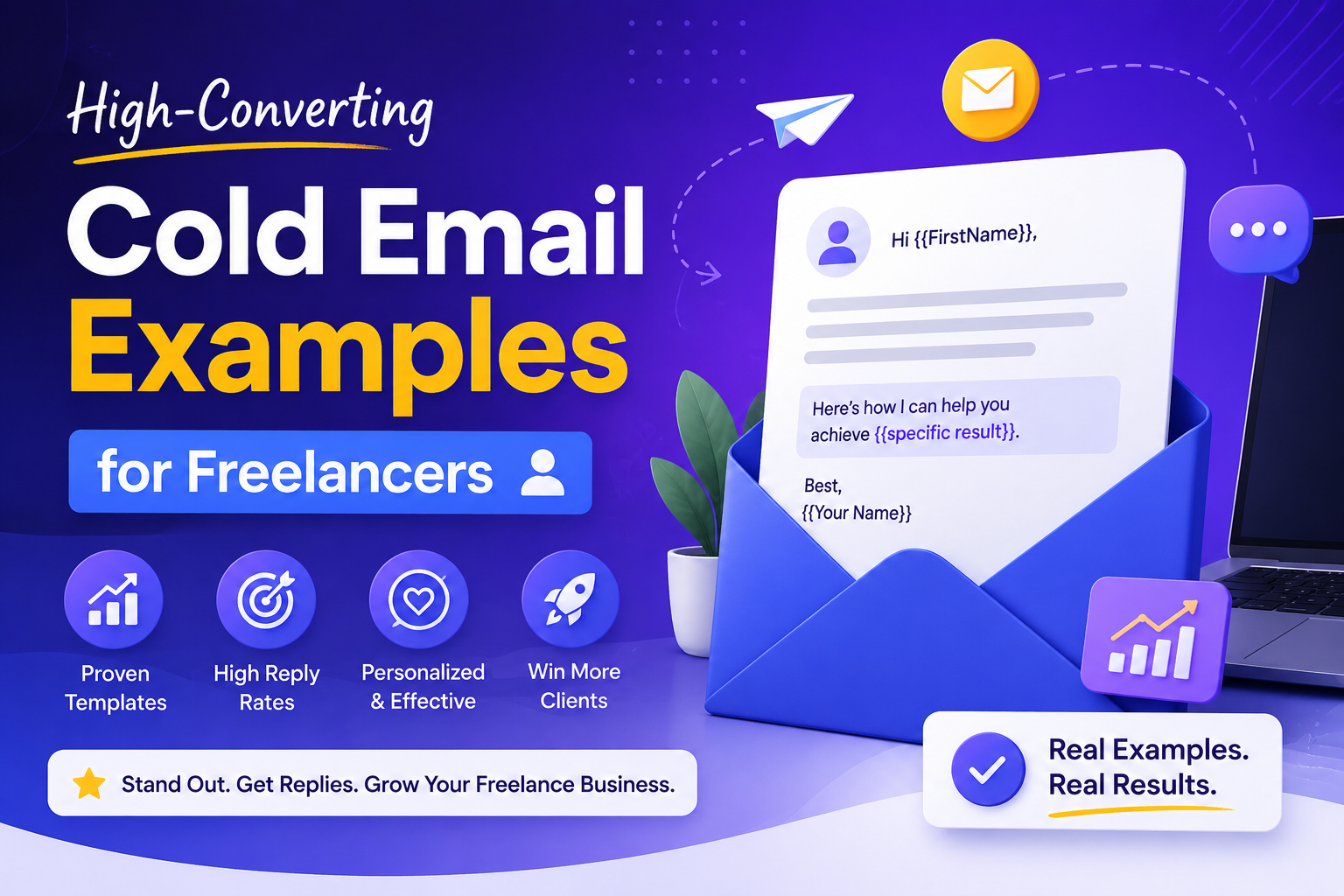
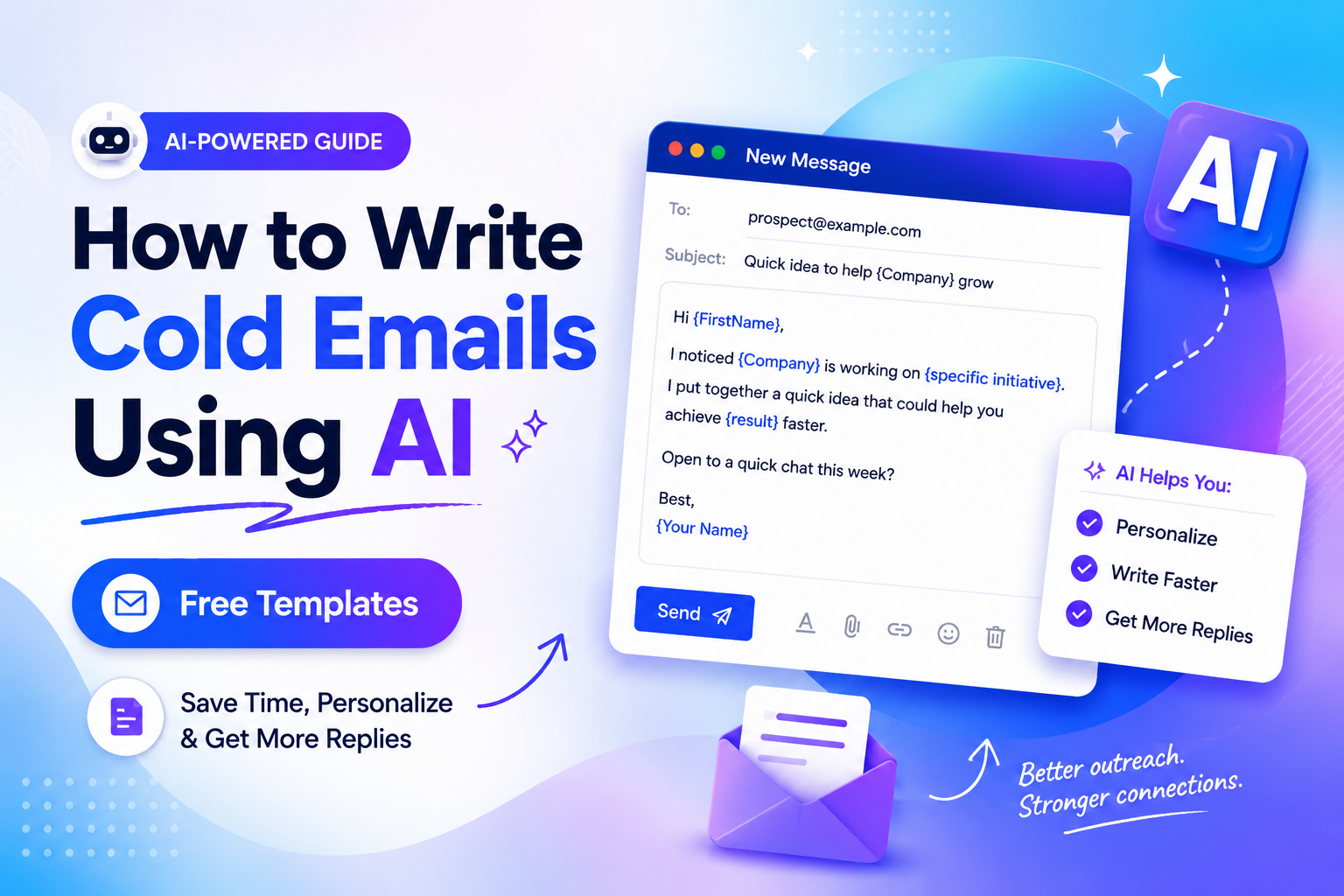
Use these as a starting point. The brackets aren't optional — fill them in with real details, or don't send the email.
Template 1 — The "I Noticed Something" Opener
Subject: [specific thing you noticed]
Hi [Name],
Saw that [specific observation — a launch, a hire, a post, something real]. Made me think you might be dealing with [related problem].
I help [type of company] with exactly that. Recently worked with [similar company] and [specific result].
Worth a quick call?
[Your name]
Template 2 — The Job Posting Angle
Subject: Re: your [Role] search
Hi [Name],
Noticed you're hiring a [Role]. That usually means [what it signals — scaling, a gap, a new initiative].
I do that work freelance and could help bridge the gap while you're searching — or just take it off your plate entirely.
Open to a 20-minute call this week?
[Your name]
Template 3 — The Content Hook
Subject: Your piece on [topic]
Hi [Name],
Read your [article/post/interview] on [topic]. The bit about [specific point] was exactly right — we see that constantly with our clients.
We help [type of company] get past that exact issue. I think there's something worth talking about here.
15 minutes sometime this week?
[Your name]
Template 4 — The Direct Pitch
Subject: One idea for [Company]
Hi [Name],
I'll keep this short. I [what you do], and I think [Company] could benefit because [one specific, honest reason].
If I'm wrong, no worries. If I'm right, would a quick call be worth it?
[Your name]
Template 5 — The Warm Intro
Subject: [Mutual contact] suggested I reach out
Hi [Name],
[Mutual contact] mentioned you might be thinking about [relevant topic]. I've helped a few people in similar situations and thought it might be worth connecting.
No pitch — just wanted to introduce myself and see if there's anything useful I can share.
Would that be worth 15 minutes?
[Your name]
The Stuff Nobody Talks About: Deliverability
The best cold email in the world means nothing if it lands in spam. A few things worth knowing:
- Warm up new domains first. Send a small handful of emails daily for a few weeks before ramping up. Jumping straight to 100 emails a day on a fresh domain is how you get blacklisted.
- Don't send from your main company domain. If that domain gets flagged, it affects all your business email — not just outreach.
- Keep your list clean. Sending to invalid addresses tanks your sender reputation. Run your list through a verification tool before any campaign.
- Always include an unsubscribe link. Not just because it's legally required in most countries — but because someone who wants off your list isn't going to become a customer anyway.
Frequently Asked Questions
What's a realistic reply rate?
For targeted, personalized outreach, 5–15% is solid. If you're sitting under 2%, the issue is usually targeting (wrong people) or message (wrong pitch) — rarely the channel itself.
How many follow-ups is too many?
Two or three. Each follow-up should add something new — a different angle, a useful resource, a changed ask. "Just bumping this up" is mostly a waste of everyone's time.
Is cold email legal?
Cold email to businesses is legal in most places as long as you're transparent about who you are and make it easy to opt out. The US has CAN-SPAM, the EU has GDPR, Canada has CASL. Worth a quick read if you're running any volume.
Should I use AI or not?
AI with good input and real editing: yes. AI as a replacement for actually thinking about your prospect: no.
One Last Thing
Cold email works because it's direct. No algorithm, no ad auction, no follower count required — just you, your prospect, and whether what you wrote was worth their time.
AI makes it faster to write more emails. But faster isn't better if the emails aren't good. Use it to sharpen your thinking and cut your editing time — not to skip the part where you actually pay attention to the person you're reaching out to.
That's what gets replies. That's always been the thing.
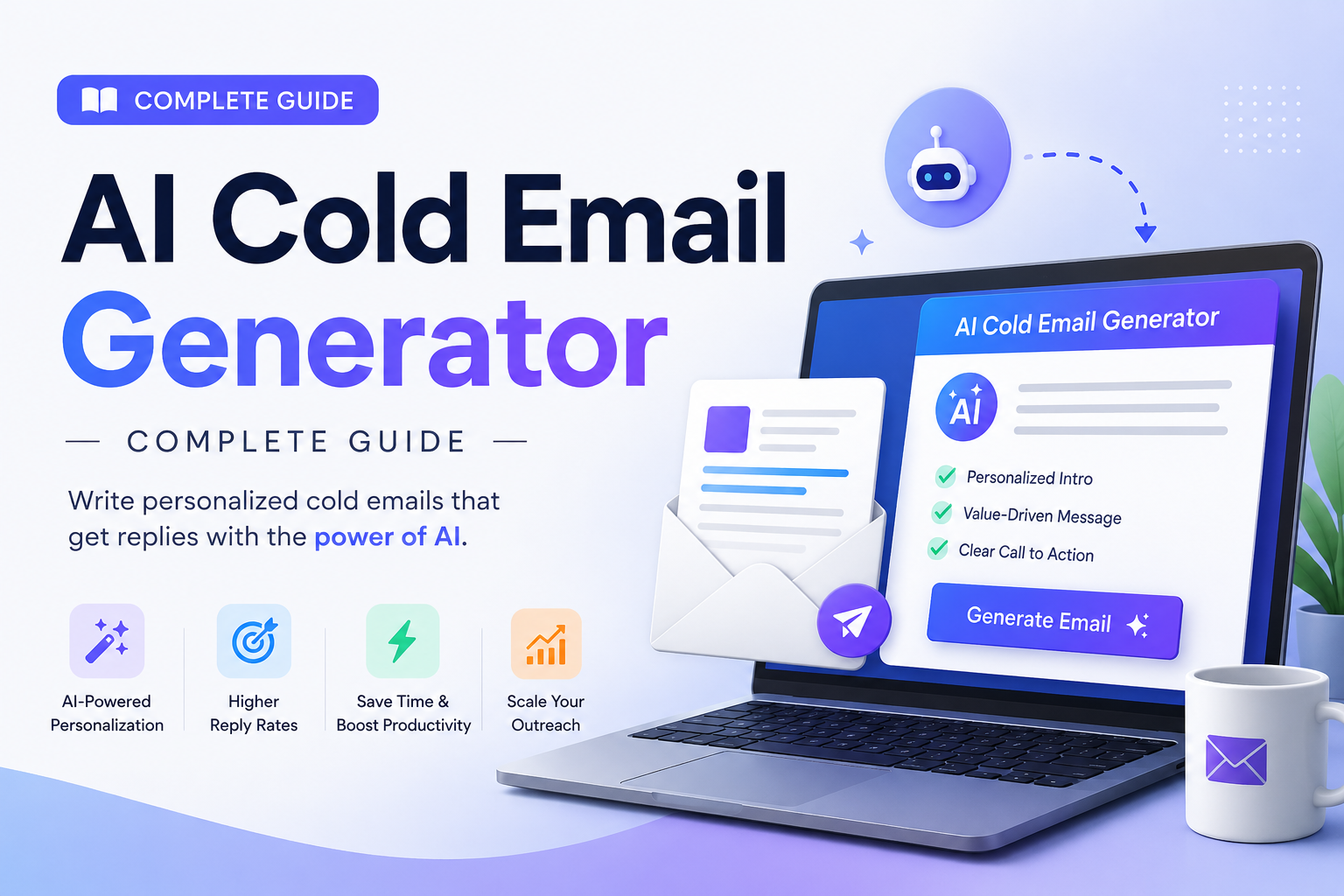
Try it free: Running cold outreach and want to skip the manual research step? Geotools' free cold email generator reads a prospect's website and drafts a personalized email in seconds.