Let me be honest with you for a second. Most cold emails are terrible — not slightly-off terrible, but delete-without-reading terrible. They start with "I hope this email finds you well," pitch a service nobody asked for, and end with a desperate "Would love to connect!" that sounds like it was written by someone who has never actually talked to another human being.Cold Mail Generator
And yet, cold email remains one of the highest-ROI client acquisition channels available today — for freelancers, agencies, SaaS founders, and B2B service providers alike. The problem isn't the channel. It's how people use it.
This guide is going to fix that. By the end, you'll know exactly how to write cold emails that get replies — and how a free AI cold email generator can do most of the heavy lifting for you, without turning your outreach into something that sounds machine-made.
Why Cold Email Still Works in 2026
Every few years someone publishes a "cold email is dead" think piece. And every year, sales reps and freelancers quietly keep booking meetings through cold outreach while everyone else is chasing trending social media strategies.
Here's why it still works: cold email is direct, one-to-one, and scalable. Unlike ads, you're not shouting into a crowd. Unlike SEO, you don't wait six months to see results. You identify someone who needs what you offer, write them a genuine message, and create an opportunity that didn't exist five minutes ago.
Key Insight: The emails that consistently get replies feel like they were written specifically for that one person — because they were. Generic, template-blasted outreach gets ignored, and in 2026, both inbox spam filters and human attention spans are sharper than ever.
Step 1: Know Exactly Who You're Targeting
Before you write a single word, you need to know who you're writing to. This sounds obvious, but most people skip it. Start by building a tight Ideal Customer Profile (ICP). Ask yourself:
- What industry are they in?
- What is their company size?
- What problems keep them up at night?
- What does success look like for them?
For example, if you're an SEO specialist, don't blast emails at "all businesses." Target e-commerce brands with 10–50 employees that are spending on Google Ads but have weak organic search. That specificity changes everything — it tells you what pain points to address and what language to use.
Pro Tip: Tools like Hunter.io let you find verified email addresses for free (up to 25 per month on their free plan). LinkedIn is your research goldmine for understanding each prospect's role and recent company activity before you reach out.
Step 2: Research Your Prospect — Without Spending Hours Doing It
This is where most people either give up or cut corners. Researching 50 prospects manually is exhausting. So they write one generic template and blast it out, which produces exactly the 2% reply rate they deserve.
The Smarter Approach: Use AI to Do the Research
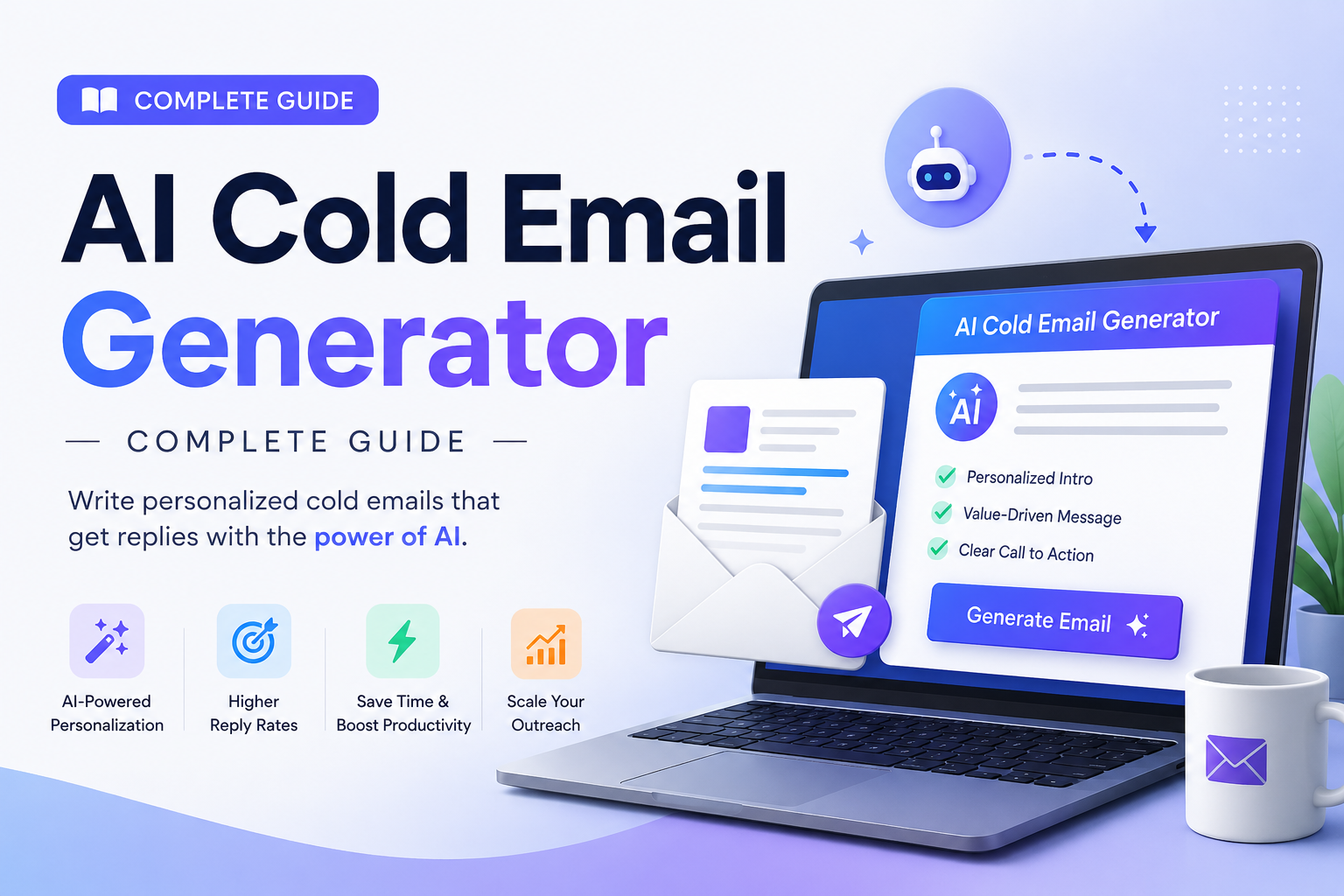
A tool like the free AI cold email generator on GeoTools does something most cold email generators don't — it actually reads your prospect's website before writing the email. You paste in their URL, describe your core offer, and the AI analyzes their business, identifies what they actually do, and crafts a message that references their specific context.
That's not magic. That's just what good research looks like — automated.
GeoTools vs Template-Based Generators
| Feature | GeoTools (Free) | Copy.ai / folk / Mailmeteor | SmartWriter (Paid) |
|---|---|---|---|
| Reads prospect's website | Yes ✓ | No ✗ | Yes ✓ |
| Fully free | Yes ✓ | Limited free tier | No — $49+/month |
| No account / login required | Yes ✓ | No ✗ | No ✗ |
| Spam-safe, humanized output | Yes ✓ | Partial | Yes ✓ |
| Personalization depth | Business context | Name / company field only | Deep (LinkedIn + web) |
Step 3: Write an Email That Sounds Like You
Even when AI drafts your email, you should read it like it came from your keyboard. Here's the anatomy of a cold email that actually works:
Subject Line
Keep it under 6 words. Make it feel like something a colleague would write, not a marketer. "Quick question about your SEO" works better than "Unlock 10X Growth with Our Proven Strategy."
Opening Line
Reference something specific about them. Not "I came across your website and was impressed" — that's filler. Try something like: "Noticed you're running Google Ads but your blog hasn't been updated since 2023 — there might be a gap worth fixing."
The Pitch
One sentence. What do you do and why does it matter to them specifically? Not your whole service menu — one thing, for this person.
Social Proof
One line. A result you got for someone similar to them. "I helped a SaaS company in your space grow organic traffic 3× in five months" beats a long list of client logos.
Call to Action
Make it easy. "Would it be worth a 15-minute call this week?" requires far less commitment than "Schedule a full discovery session via my Calendly."
Pro Tip: Aim for under 150 words total. If you can't explain the value in 150 words, you haven't clarified it enough for yourself yet.
Step 4: Make Sure It Actually Lands in the Inbox
Writing a great email means nothing if it goes straight to spam. Deliverability is the unsexy side of cold email that most guides skip — don't skip it.
Non-Negotiable Technical Setup
- SPF, DKIM, and DMARC: In 2026, Gmail and Outlook effectively require all three for cold outreach to land in the primary inbox. If you don't have these configured, stop here and fix them first.
- Domain warmup: If you're sending from a fresh domain, ramp up gradually over two to four weeks. Tools like Instantly.ai and Smartlead have built-in warmup features.
- Daily volume cap: A safe ceiling is around 40–50 emails per inbox per day. If you need more volume, add sending accounts rather than increasing per-account volume.
- Avoid spam triggers: Plain-text style, natural language, no excessive links or marketing buzzwords. HTML-heavy templates with tracking pixels and multiple CTAs are a fast path to the promotions folder.
Key Insight: The GeoTools AI cold email generator is specifically built to produce humanized, spam-safe output — no templated language, no trigger words, and a natural reading flow that inbox filters treat the same as a human-written message.
Step 5: Follow Up Without Being Annoying
Most replies don't come from the first email. Research consistently shows that follow-up sequences of four to seven emails produce significantly more responses than a single message — but there's an art to following up without making someone want to block you.
- Space follow-ups 2–4 days apart, not same-day.
- Each follow-up adds a new angle or piece of value — don't just say "circling back" and paste your original email again.
- Keep a light, non-needy tone: "Thought this case study might be relevant to what you're working on" is better than "Just wanted to make sure you saw my last email."
- Stop after 5–6 attempts. If someone hasn't responded after that, move on — and maybe come back in three months with a fresh angle.
Step 6: Scale What Works
Once you find a combination of subject line, opening, and offer that produces replies, that's when you scale. Not before.
This is the biggest mistake people make with AI cold email generators: they use them to blast volume before they've validated the message. Send 20–30 personalized emails first. See what response rate you get. Tweak the offer, the opener, the CTA. Then, once something is converting at a 10%+ reply rate, use the generator to scale that specific approach to more prospects.
Pro Tip: The GeoTools free cold email generator requires no account, has no usage cap, and asks for no credit card. You can generate and iterate as many versions as you need to find what works — then systematically apply it to your full prospect list.
Who This Works For
Cold email with proper personalization works across a wide range of professionals:
- Digital marketing agencies — pitching SEO, paid ads, or social media services to local businesses
- Freelancers — offering copywriting, design, development, or consulting
- SaaS founders — booking demos with decision-makers at target companies
- B2B service providers — accountants, recruiters, consultants, PR firms
- Sales teams at startups — building pipeline without a huge budget
The common thread: you have a specific offer, a specific type of client in mind, and you're willing to personalize. Cold email gives you a direct line to the clients you actually want — if you pair intent with the right tools.
The Bottom Line
Getting clients through cold email outreach isn't about sending more emails. It's about sending better ones to the right people.
Personalization is the whole game. And the easiest way to personalize at scale — without spending hours researching every prospect manually — is to let AI read their website and do the heavy lifting for you.
If you haven't tried the free AI cold email generator on GeoTools yet, start there. No signup, no credit card, no templates. Just paste a URL, describe what you offer, and get a personalized email that actually sounds like you wrote it — because you kind of did.
The clients are out there. Your email just needs to be the one they actually reply to.