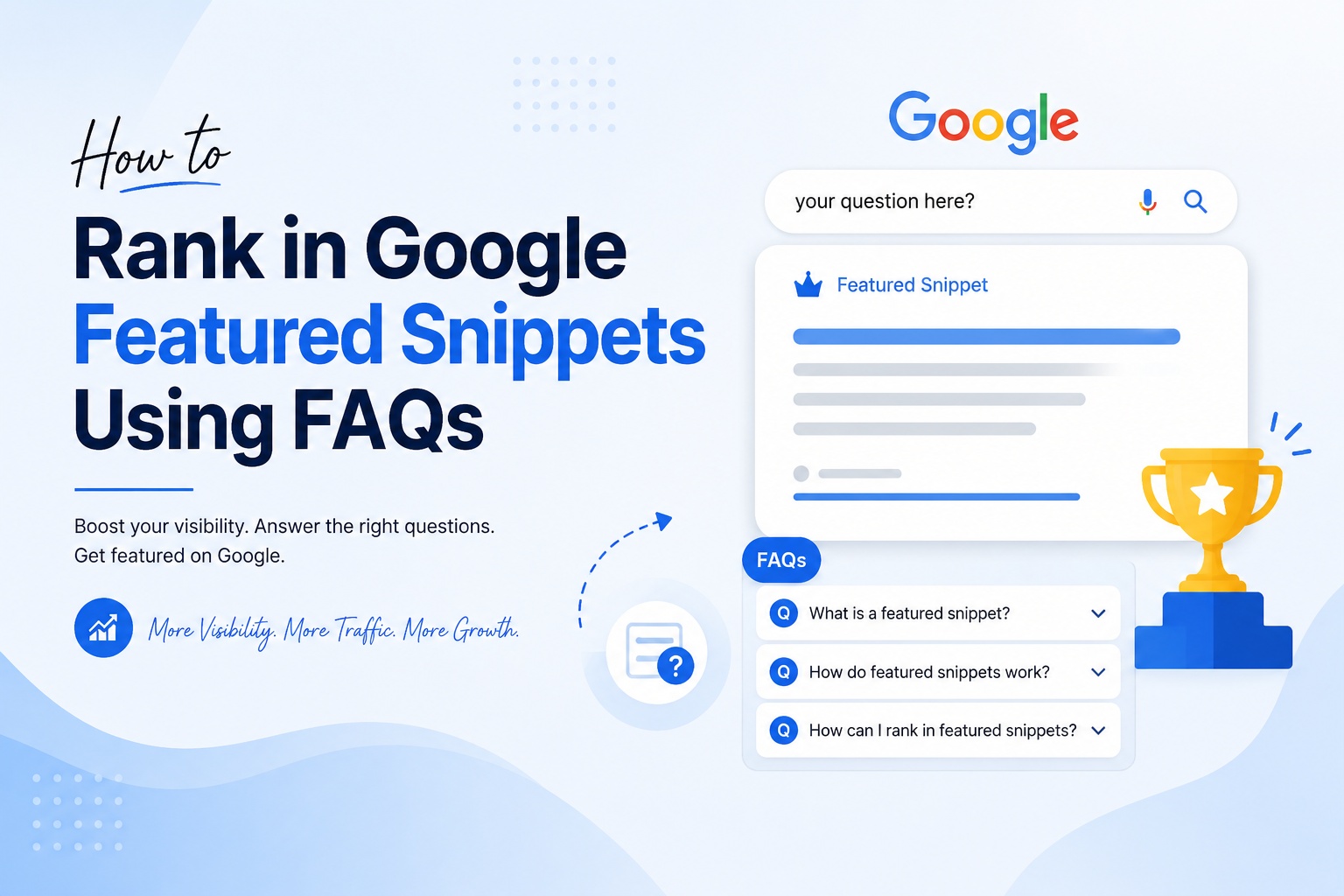
There's a spot at the top of Google search results that no amount of money can buy. It sits above the paid ads sometimes — definitely above every organic result. It displays your answer, your brand name, and your URL in a format that takes up more screen space than anything else on the page. Some SEOs call it "position zero." Most people just know it as the box at the top that answers their question before they've clicked anything.
That's a featured snippet. And if you've ever wondered how some pages get there while yours sits at position four or five doing respectable but unremarkable work, this guide will explain it — specifically through the lens of FAQ content, which is one of the most reliable paths to earning those positions.
Key Insight: There's no guaranteed formula. Google has never published an official checklist for earning a featured snippet. But there are real, observable patterns in what gets pulled into those boxes — and once you understand them, you can build content with a genuine shot at those positions.
What Is a Featured Snippet, Really?
A featured snippet is a direct answer that Google extracts from a webpage and displays prominently at the top of a search result page. The page being extracted from doesn't have to be ranked number one — Google regularly pulls featured snippet content from pages ranked anywhere in the top ten. Your URL and website name appear below the extracted content, meaning people see your brand before they see anyone else's.
There are several distinct types:
| Snippet Type | Format Extracted | Common Query Triggers |
|---|---|---|
| Paragraph | A block of text that directly answers a question | "What is…", "Why does…", "How does…" |
| List | Numbered or bulleted list items | "How to…", "Best ways to…", "Steps for…" |
| Table | Structured comparative data | "X vs Y", "Comparison of…", pricing tables |
The most common type, especially for question-based queries, is the paragraph snippet — and that's the format most closely aligned with FAQ content. Queries that trigger featured snippets almost always start with a question word: what is, how does, why does, when did, which is better. FAQs are, by definition, questions with answers — exactly the format featured snippets are looking for.
Why Most Pages Never Earn a Featured Snippet
Most pages that could earn a featured snippet don't — because of a handful of avoidable mistakes.
- The answer is buried. A 3,000-word post that spends the first 600 words explaining what SEO is before answering the actual question makes Google work too hard to find the answer. Google's systems are looking for pages that answer the question quickly and clearly.
- The content is too vague to extract. "It depends" is a complete answer to almost no question. Google needs something specific enough to display in isolation — something that makes sense to a person who has never read the rest of your page.
- The page isn't close enough to the query. Featured snippets almost always come from pages already ranking on page one. If your page is on page two or three, work on ranking on page one first — that's a prerequisite, not a parallel track.
- The format doesn't match what Google expects. For a "how to" query, Google wants steps. For a "what is" query, Google wants a paragraph definition. For comparisons, Google sometimes wants a table. If your format doesn't match, Google will pull from someone whose does.
Pro Tip: FAQ content, done correctly, avoids most of these problems by default. A well-written FAQ answer is specific, concise, and designed to answer one question at a time — which is exactly what Google needs when selecting featured snippet content.
The Connection Between FAQs and Featured Snippets
When you write an FAQ section, you're doing something that naturally aligns with how Google selects featured snippets. You're choosing a specific question, writing a focused answer, and presenting both in a clear structure. The question tells Google exactly what query this content is relevant for. The answer gives Google something specific to extract.
Compare this to a standard blog post, where a question might be answered somewhere in the body text, surrounded by context, transitions, and other content. Google has to work to identify where the answer actually is — and verify the answer is self-contained enough to make sense on its own. With FAQ content, you've done that work already. The structure itself signals: "This is a question. This is the answer. They belong together."
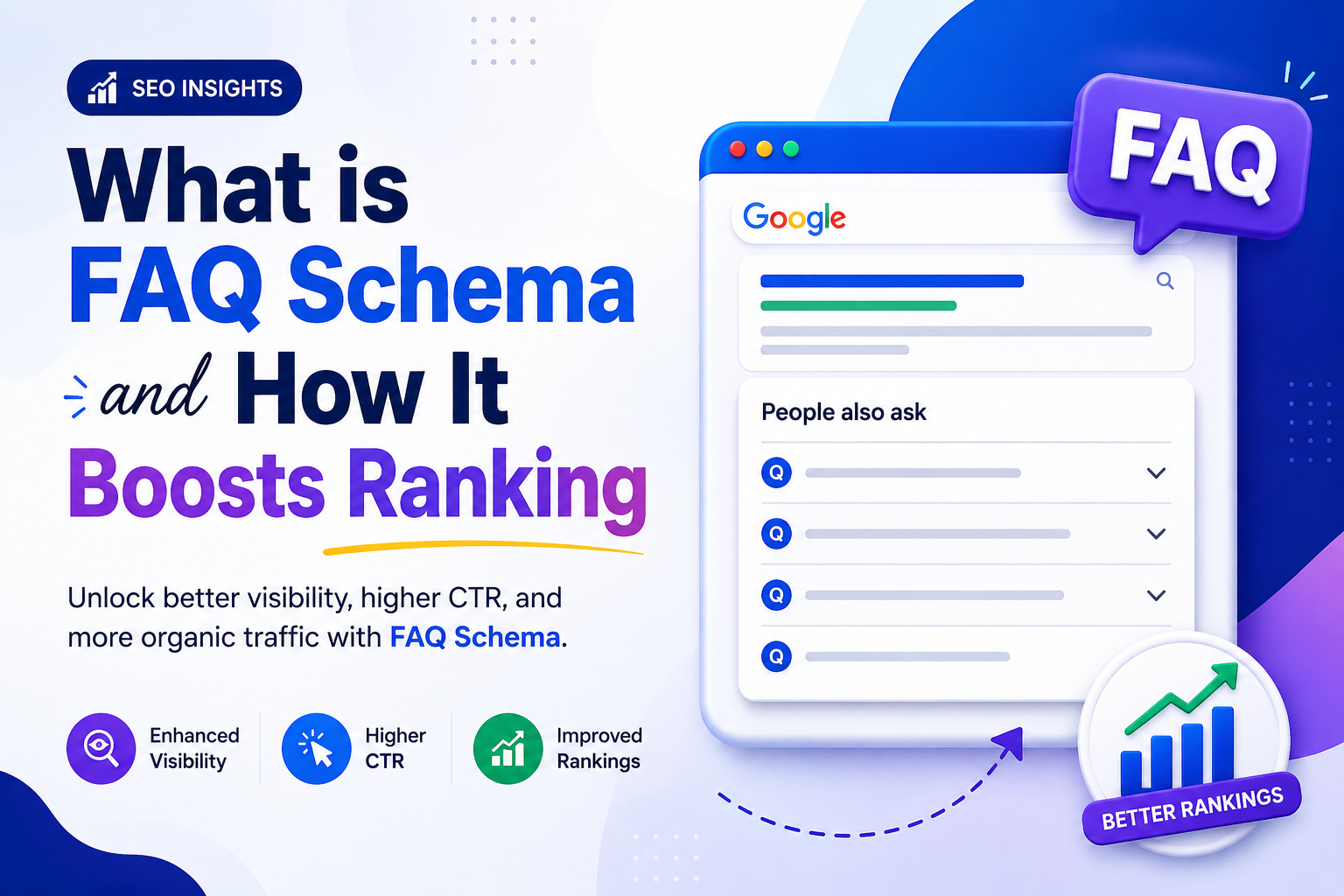
This is also why FAQ schema — the structured data markup that explicitly labels Q&A content for search engines — reinforces the connection. The schema doesn't cause featured snippets, but it confirms Google's interpretation of your content. When crawlers see a question-answer pair in both visible page content and JSON-LD markup, they have higher confidence about what that content is and what query it matches.
How to Write FAQ Answers That Actually Get Pulled as Snippets
Writing FAQ content that has a genuine chance of earning featured snippet treatment requires attention to a few specific things.
Lead with the Direct Answer
The very first sentence of your answer should be the answer — not background, not context, not "great question." If the question is "How long does it take to rank in Google?" the first sentence should be something like: "Most pages take between three and six months to rank on page one of Google, though highly competitive keywords can take twelve months or more." That's extractable. After that sentence, you can add context, caveats, and nuance — but always lead with the direct answer first.
Keep It Between 40 and 60 Words
Featured snippet paragraphs tend to fall in the 40–60 word range. Short enough to be extracted cleanly and displayed without truncation. Long enough to actually say something useful. Answers shorter than 30 words often lack the specificity Google needs. Answers longer than 80 words risk being cut off or skipped in favour of something more concise. Write your first draft, then edit it down ruthlessly.
Use the Keyword from the Question in the Answer
In a natural, sensible way — not keyword stuffing. If the question is "What is FAQ schema?" your answer should include the phrase "FAQ schema" early. This helps Google understand the relationship between the question and the answer, and it's one of the patterns consistently observed in pages that earn featured snippets.
Avoid First-Person References That Create Context Dependency
Phrases like "We believe that…" or "At our company, we…" make an answer awkward when displayed as a featured snippet for a general query. The best FAQ answers read as informative and objective — they work as standalone pieces of information that could appear without your brand name attached.
Write One Answer Per Question — Not One Essay Per Question
Each FAQ answer should answer one specific question. If you find yourself introducing sub-topics, exceptions, and related considerations, you've written two or three answers that should be split into separate questions. Treating each question as an invitation to write a blog post is the biggest mistake people make when building FAQ sections.
Matching Your FAQ Content to Snippet-Eligible Queries
Not all queries trigger featured snippets, and not all FAQ content will compete for them. Snippet-eligible queries tend to share a few characteristics:
- They're phrased as genuine questions
- They're informational in nature — someone trying to understand something, not someone ready to buy
- They have a reasonably clear, non-contested answer
- They're not so simple that Google answers them within the search interface itself
Pro Tip: The best way to find snippet-eligible queries is to study the People Also Ask boxes that appear on Google search results for your main topics. These are questions Google is actively surfacing to searchers — meaning there's either an existing featured snippet or one waiting to be claimed. Make a list of every PAA question for your core topics. These are your FAQ targets.
The Role of FAQ Schema in Featured Snippet Strategy
There's significant confusion in the SEO community about this, so it's worth being precise.
FAQ schema markup does not directly cause Google to feature your content in a snippet. It's not a trigger Google has built in — "see FAQ schema, show featured snippet." The relationship is more indirect and more valuable than that.
What FAQ schema does is confirm the structure of your content. When Google's crawlers read your page and find a visible question followed by a visible answer, they make an interpretation. When they also find JSON-LD markup explicitly labelling that Question and acceptedAnswer, that interpretation becomes more confident. More confident interpretation means Google is more likely to trust that content for extraction.
| Without FAQ Schema | With FAQ Schema |
|---|---|
| Google infers Q&A structure from visible content alone | Google's interpretation is confirmed by structured data |
| ~70% confidence the answer directly responds to the query | ~95% confidence — reducing the ambiguity gap |
| Higher chance of being skipped for a clearer competitor | Higher likelihood of extraction as a featured snippet |
For a complete featured snippet strategy, combine: clear visible FAQ content on the page, FAQ schema markup confirming the structure, and answers written in the format that matches the query type.
Building FAQ Content at Scale Without Losing Quality
Once you understand what makes FAQ content snippet-eligible, the next challenge is scale. A single page with a good FAQ section is a start. A site where every key page has relevant, schema-marked FAQ content is a fundamentally different SEO position.
The research alone is significant. For every page, you need to identify the right questions — not guessed questions, but questions people are actually searching. The writing needs to be specific and concise. The schema markup needs to be valid. For most teams working on multiple pages simultaneously, doing this manually is slow enough that it either doesn't happen or happens with cut corners.
Tools that read actual page content and generate relevant Q&A pairs — rather than generic industry questions — can change the economics of building FAQ content at scale. The key is ensuring: questions are grounded in what the page actually says, answers are concise and direct in the format featured snippet extraction prefers, and output includes both visible content and valid schema markup, covering both sides of the confidence equation Google is making.
A Realistic Expectation About Timelines
Featured snippet positions are not permanent, and earning one takes time.
Google continuously evaluates which pages best answer which queries. A snippet position earned today can be lost to a competitor who publishes a better answer next month. The realistic timeline for seeing featured snippet results from a content update or new FAQ implementation is:
- Pages already ranking on page one: typically two to four months
- Pages currently ranking lower than page one: must achieve page one ranking first — this is a prerequisite, not a parallel track
Key Insight: Consistent, ongoing investment in FAQ content pays off more than a one-time push. Pages that maintain accurate, well-structured FAQ sections over time hold snippet positions more reliably than pages that earn them through a burst of effort and then go unchanged.
The Bottom Line
Featured snippets are not mystical. They're the product of content that's structured clearly, answers questions directly, and is marked up in a way that reduces ambiguity for Google's systems.
FAQ content is the most natural format for earning these positions, because FAQ content is literally built around questions and answers — exactly what featured snippets are designed to surface. Schema markup confirms the structure your content already has; it doesn't replace quality writing.
The businesses that build this kind of content consistently, and across their key pages, are the ones who show up at the top of results — above the paid ads, above the organic results, in a box with their name on it — for question after question in their space.
That's not luck. That's structure, specificity, and patience.