Most people who talk about link building make it sound like a puzzle with a clean solution. Write great content. Get links. Watch rankings climb.
If only it worked that way.
The reality is that great content sitting on a well-optimized site can still go months without a single inbound link — not because it isn't good, but because nobody knows it exists. Links don't fall out of the sky. Most of the time, someone has to reach out and ask for them.
That's where cold email comes in. And honestly, it's one of the most underrated parts of any real SEO strategy.
Why Cold Email Still Works in 2026
There's a narrative going around that cold email is dead. Spam filters are smarter. Inboxes are more cluttered. People just don't reply anymore.
That's partly true — for bad cold email. The spray-and-pray approach of blasting 500 generic pitches a week and hoping three people respond? Yeah, that's dead. But cold email built around actual research, a specific reason to reach out, and a message that feels like it came from a person rather than a template? That still works.
In fact, for link building specifically, cold email is one of the only methods that scales without requiring a huge budget. You don't need to run ads. You don't need to build relationships for six months before asking a favor. You find a relevant site, you write a good email, and you ask. Simple in theory. Most people just execute it badly.
The Connection Between Links and Rankings
Google has been saying for years that links are one of the top ranking factors. That hasn't changed.
What has changed is how they evaluate those links. A hundred low-quality links from directories and irrelevant sites will do almost nothing — and might actively hurt you. Ten links from pages that are genuinely relevant to your topic, written by real people with real audiences, can move rankings in ways that months of on-page optimization can't.
Key Insight: The goal of cold email link building isn't volume. It's getting fewer, better links from sites your audience actually reads. Quality over quantity isn't a cliché here — it's the entire strategy.
Finding the Right Targets
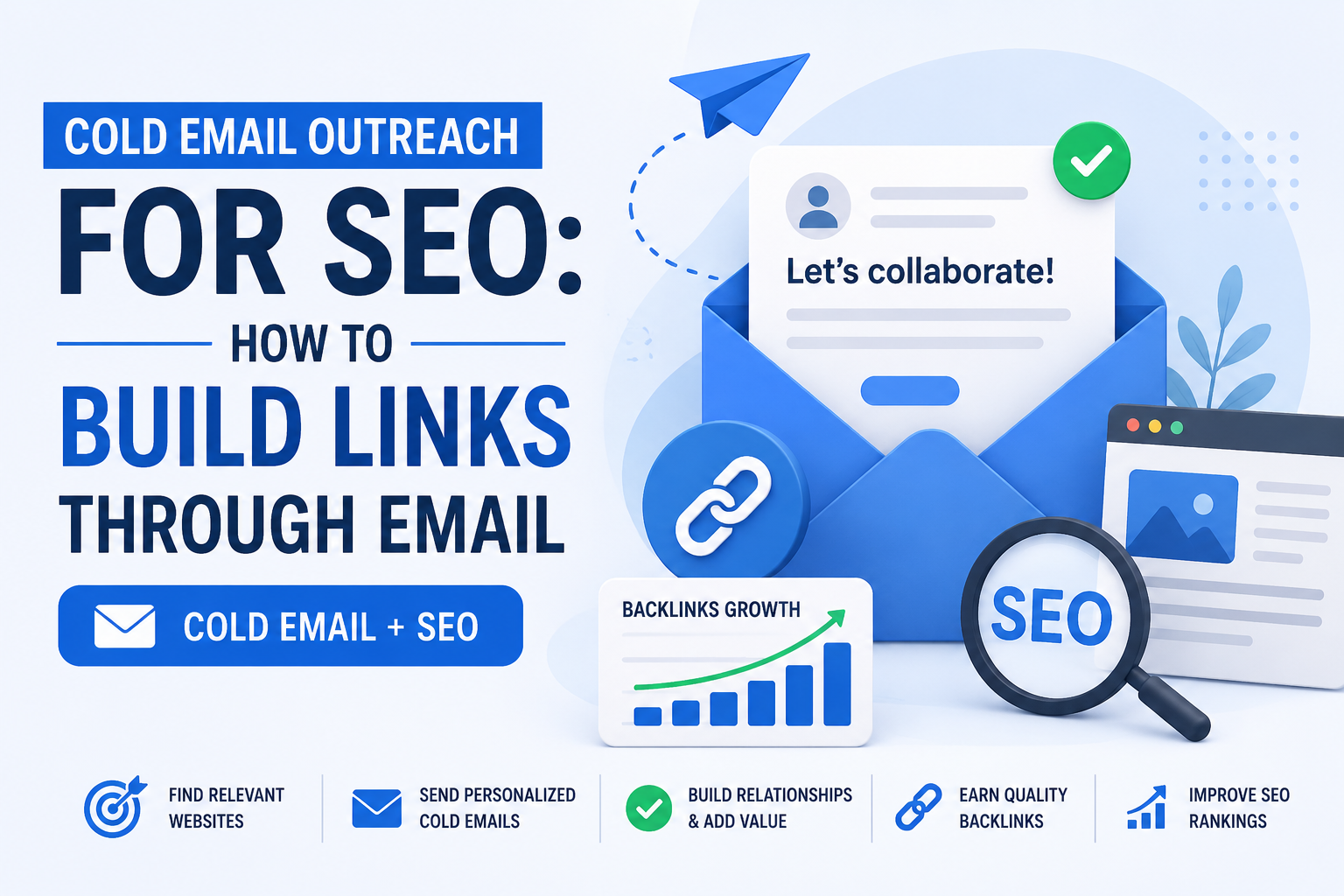
Before you write a single email, you need a list of people who actually make sense to contact. If you're doing link building outreach for an SEO tool like GeoTools, you don't want to email every site that has ever mentioned SEO. You want sites where the link would make sense in context — where readers would find it useful and the content around the link is relevant.
Where to Start Your Prospecting
- Blogs that cover your topic and link out to tools. In the SEO space, these are roundups, resource lists, and "best tools for X" articles. If a blog has already written "10 free SEO tools you should know about" and GeoTools wasn't on the list, that's a warm outreach opportunity.
- Guest post contributors. Find writers who contribute to multiple blogs in your space. If they write about digital marketing on five different publications, that's five potential placements from one relationship.
- Broken link opportunities. Someone's resource page has a dead link to a tool that no longer exists. You reach out, point it out, and suggest your tool as a replacement. This genuinely helps the site owner, which is why response rates on these are higher than most other outreach methods.
- Adjacent tool and topic sites. GeoTools offers a Cold Email Generator, an SEO Checker, an LLMs.txt Generator, and a FAQ Generator. Any site covering email marketing, technical SEO, AI tools, or content strategy is a legitimate target where the link makes contextual sense.
Writing Emails That Actually Get Replies
Most cold link-building emails fail for the same handful of reasons: they're too long, they open with a fake compliment, they explain the sender's entire business history before getting to the point, and they ask for something without making a clear case for why the recipient should care.
What Works Instead
- Open with something specific. Not "I love your blog." Everyone says that. Something like: "I was reading your roundup of free SEO tools from last month — the breakdown of how each one handles crawl errors was really well done." That tells the person you actually read their work. It takes 30 seconds more to write, but it changes the entire tone of the email.
- Get to the point fast. By the second or third sentence, they should know why you're emailing. Don't make them read four paragraphs to find out you're asking for a link.
- Give them a reason, not just a request. "I'd love a link to my site" offers nothing. "I noticed your article mentions [topic] but doesn't have a resource for [specific thing] — we built a free tool that does exactly that, and I think it'd be useful for your readers" gives them a reason to act.
- Make it easy to say yes. Include the specific URL you want linked and suggest anchor text. If you're pitching guest content, offer two or three topic ideas they can pick from. The less work it requires, the more likely they are to respond.
- Keep it short. Three to five sentences. If you've done the targeting right, you don't need to over-explain. The right person on the right site will get the point quickly.
Pro Tip: Remove every sentence that starts with "I know you're busy," "I just wanted to reach out," or "I've been a long-time fan." These phrases are invisible to the reader and actively signal that the rest of the email is templated.
A Real Outreach Email Template
Here's how this looks in practice — for a site like GeoTools reaching out to an SEO or content marketing blog:
Subject: Quick note about your free SEO tools roundup
Hi [Name],
Found your roundup of free SEO tools while researching something for a project — the section on technical audits was genuinely useful.
I wanted to flag a tool that might be worth adding: GeoTools (geotools.live). It's a free suite that covers cold email generation, LLMs.txt file creation, FAQ generation, and basic SEO audits — no signup required. We built it because we kept running into the same repetitive tasks and wanted something that just handles them.
If it fits what you're covering, would love to be included. No pressure either way.
[Your name]
No fluff. A specific compliment, the pitch, the value, and a low-pressure close. That's the whole formula.
How GeoTools Makes This Faster
Manually writing personalized cold emails one by one is the right approach — but it's slow, especially when you're running a site and handling everything else at the same time.
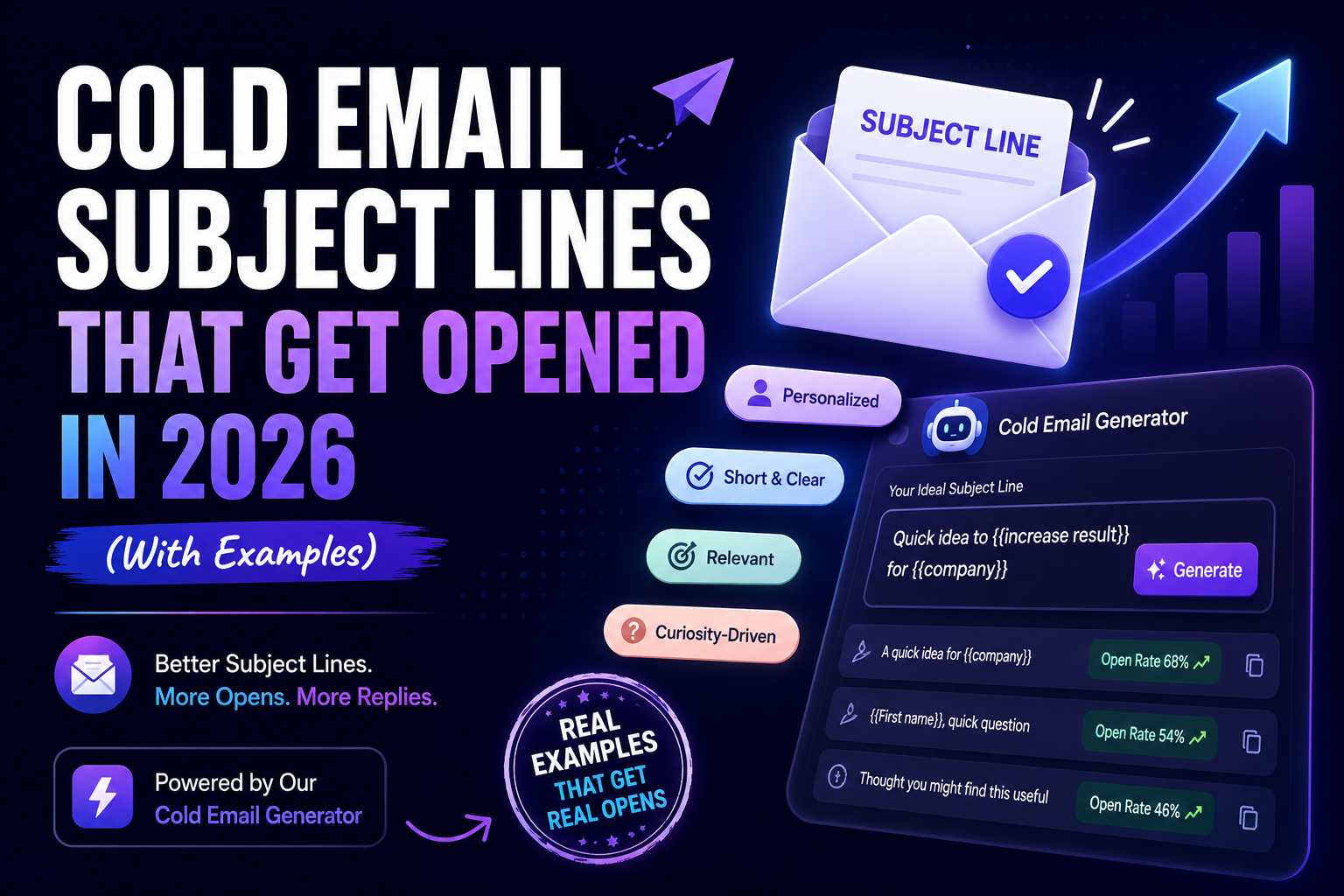
The Cold Email Generator on GeoTools is built for exactly this. You describe what you're offering, who you're reaching out to, and what the context is — and it drafts something that actually sounds like a person wrote it. Not a recycled template from 2019.
It doesn't replace your judgment. You still need to add the specific detail about each person's content and make sure the link request fits their site. But getting from a blank screen to a solid draft in under a minute is a meaningful difference when you're doing this at any kind of scale.
Following Up Without Being Annoying
Most replies to link building emails come from the follow-up, not the first message. Not because people are ignoring you on purpose — inboxes are genuinely chaotic, and a well-intentioned "I'll reply to this later" turns into a forgotten thread inside a week.
A single follow-up, sent three to five days after the first email, recovers a significant chunk of the responses you'd otherwise lose. Keep it short:
"Just bumping this up in case it got buried. Happy to answer any questions if you'd like more context."
One sentence. Don't re-send the whole pitch. Don't apologize for following up. After one follow-up, leave it. Two unanswered emails means they're not interested — sending a third is how you get marked as spam and burn a contact you might want to revisit six months from now.
What to Do With the Links You Earn
Getting a link is the beginning of the value, not the end of it. When you earn a link from a relevant site, you've created a permanent signal that another real site in your space has vouched for yours. Google's crawlers will eventually discover it, your domain authority will grow incrementally, and you'll see referral traffic from real visitors who clicked through.
Track every link you earn — the referring domain, the page it lives on, the anchor text, and roughly when it was placed. Over time you'll see which types of sites link to you most readily, which sharpens your targeting for the next round.
And when you get a link, send a quick thank-you. The person who gave you that placement might write five more relevant articles in the next year. A short "thanks for including us — genuinely appreciated" keeps you on their radar without asking for anything.
Common Mistakes That Kill Link Building Campaigns
| Mistake | Why It Fails | What to Do Instead |
|---|---|---|
| Targeting sites that are too big | Low response rate; DA gap makes link unlikely | Focus on DA 40–60 sites in your niche |
| Generic personalization ("I read your article") | Signals a template; gets ignored or deleted | Reference something specific they wrote last week |
| Asking for too many things at once | Overwhelms the reader; no clear action to take | Pick one ask per email and build the entire message around it |
| No email signature context | Reader doesn't know who you are in 3 seconds | Clear name, role, site URL in every signature |
| Giving up after one round | First 20 emails are a learning curve, not a verdict | Refine targeting and messaging with each round |
Bringing It All Together
Cold email link building isn't glamorous. It's not the kind of SEO tactic that gets a lot of conference talks. But it works — consistently, at scale, without a paid budget — if you execute it right.
The basics: find sites where a link genuinely makes sense, write emails that treat the recipient like an intelligent adult, follow up once, and track everything you earn.
Use tools that save time where time can be saved. That's the whole reason the Cold Email Generator exists on GeoTools. But invest the human attention where it actually matters: finding the right targets and writing the first line of every email with enough specificity that the person reading it can tell you actually showed up.
Get that part right, and the links will follow.
Try the GeoTools Cold Email Generator free at geotools.live/cold_mail_generator — no signup, no cost, ready in seconds.