Search engine optimization has entered its most dramatic transformation since Google first launched. Artificial intelligence is rewriting the rules — from how users search to how content gets discovered, cited, and ranked. This complete guide covers every major shift happening right now and what you must do to stay ahead.
1. The Big Picture: SEO in the AI Era
We are living through the biggest disruption in search since Google launched in 1998. Artificial intelligence has fundamentally changed how people find information online — and how search engines decide what to show them.
In 2026, the goal has shifted from winning clicks on a results page to becoming a cited authority within an AI-synthesized answer.
Key Stats You Must Know:
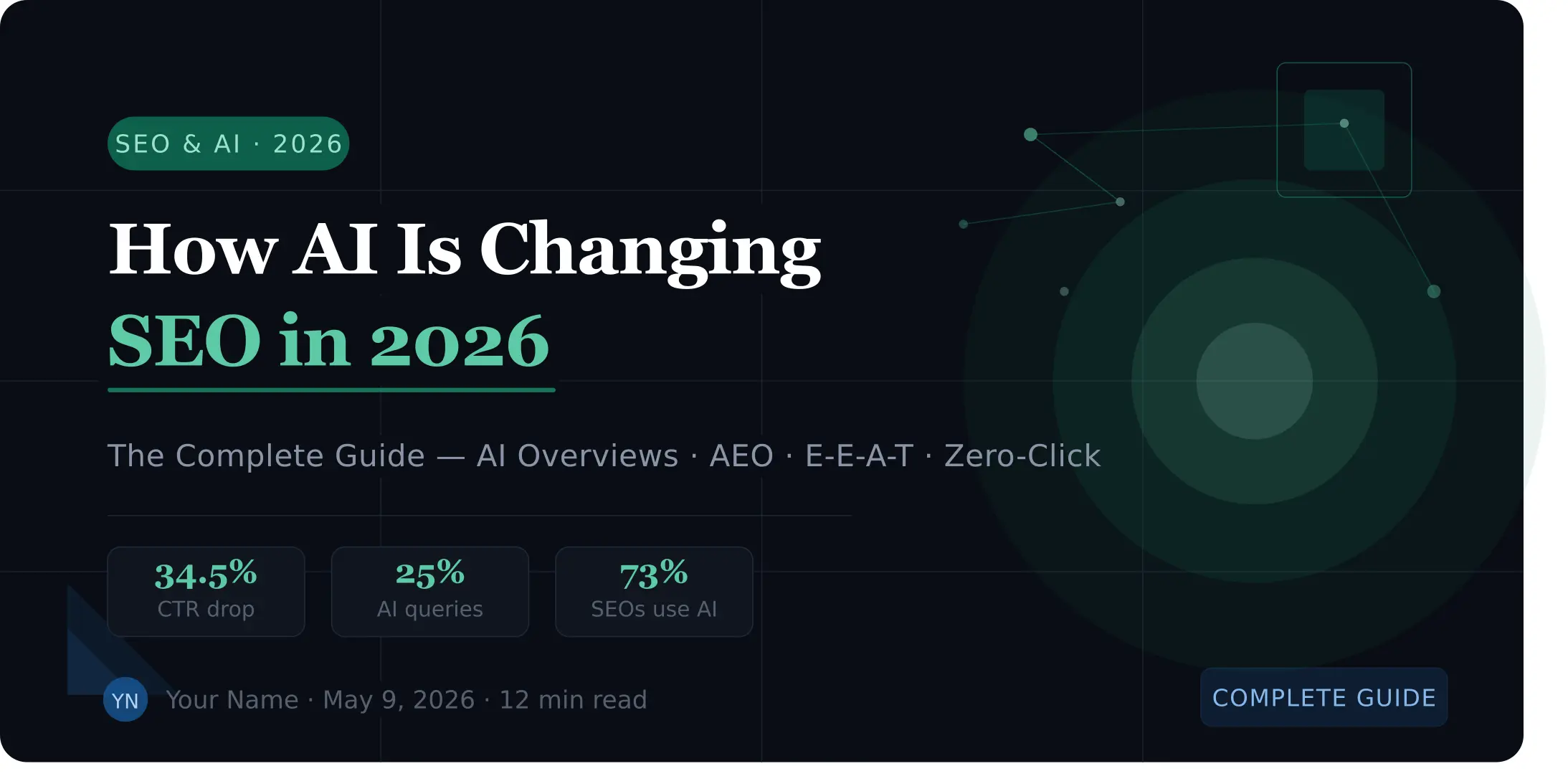
- Google still processes 14 billion daily searches — it remains dominant.
- AI tools like ChatGPT now handle 25% of global search queries.
- Google AI Overviews reduce top-result clicks by an average of 34.5%.
- 73% of SEO professionals say AI is now a core part of their strategy.
2. Google AI Overviews & Zero-Click Search
Google AI Overviews are the AI-generated summaries that pull content from multiple sources to deliver a direct answer before organic links.
Key Insight: Zero-click doesn't mean zero value. Being cited in an AI Overview builds brand credibility and positions you as a trusted authority.
How to optimize for AI Overviews:
- Write content that directly answers specific questions in clear language.
- Use structured headings (H2, H3) that mirror user queries.
- Add FAQPage and HowTo schema markup.
- Focus on genuine first-hand expertise.
3. Rise of AEO — Answer Engine Optimization
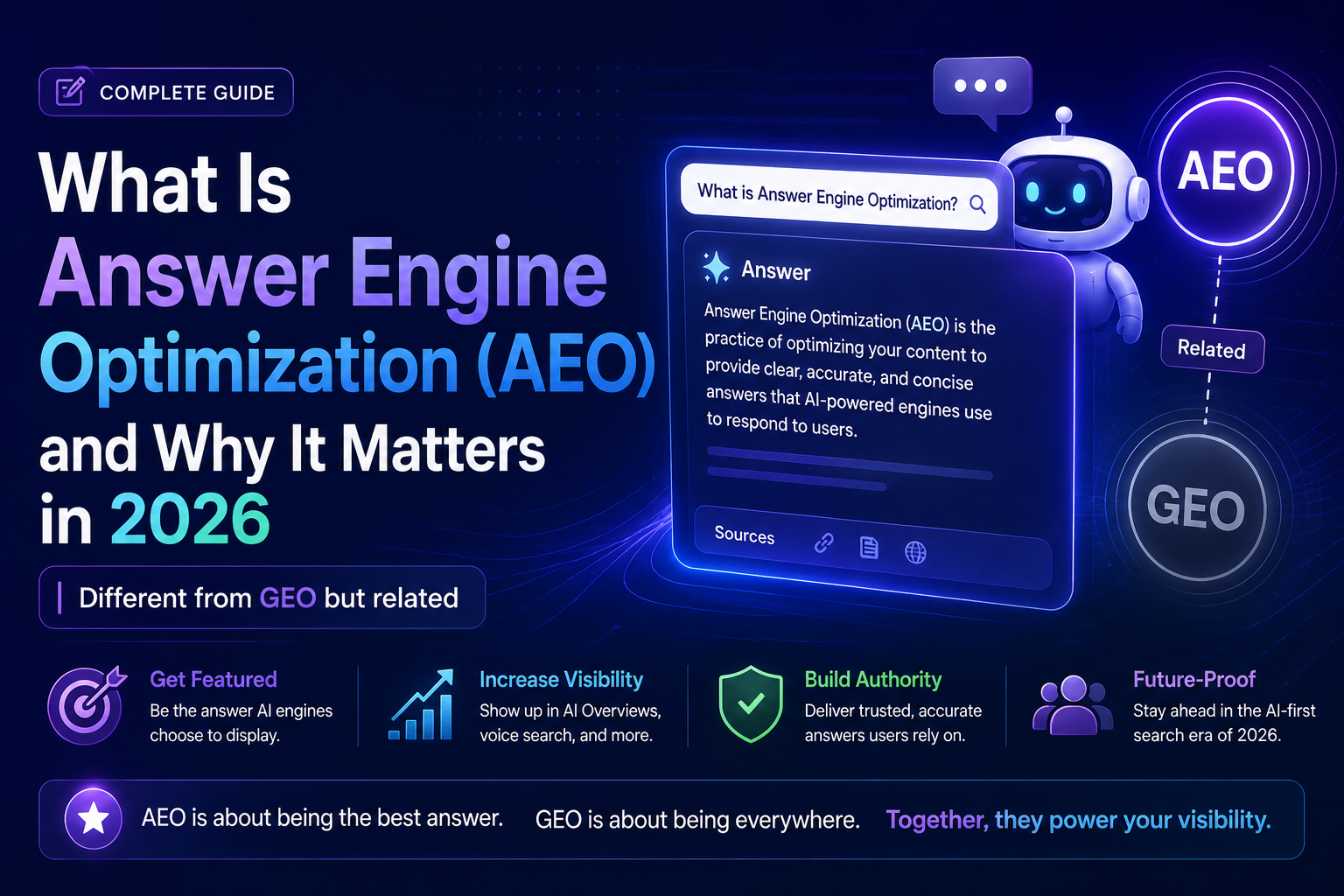
AEO (also called GEO — Generative Engine Optimization) focuses on making your content the trusted source that AI systems pull from when generating answers.
AEO vs Traditional SEO:
- Traditional SEO: Optimize for rankings and clicks.
- AEO: Optimize for citation, trust, and machine-readability.
4. E-E-A-T: The Trust Framework Powering AI Rankings
Google's E-E-A-T framework has become the cornerstone of both traditional SEO and AI visibility.
- Experience: Show real-world usage or personal involvement.
- Expertise: Demonstrate credentials and case studies.
- Authoritativeness: Earn citations from reputable niche sites.
- Trustworthiness: Maintain secure, transparent, and accurate content.
5. Structured Data & Schema Markup
Schema markup helps search engines understand the context of your content. Essential types for 2026 include:
- FAQPage: Heavily cited in AI search outputs.
- Article / BlogPosting: For news and blog content.
- Person / Organization: For author trust signals.
6. Agentic AI: The Next SEO Frontier
In 2026, AI agents are beginning to research and complete purchases for users. Brands must now optimize for machine readability and API compatibility.
- Implement clean, structured product data using schema.
- Ensure fast Core Web Vitals (LCP, CLS, INP).
- Track brand citations in AI outputs.
Your 2026 SEO Action Checklist
Technical & Content Tasks:
- Publish original, experience-driven content.
- Build topic clusters around your core subjects.
- Implement FAQPage and BreadcrumbList schema.
- Ensure HTTPS and optimize site speed.
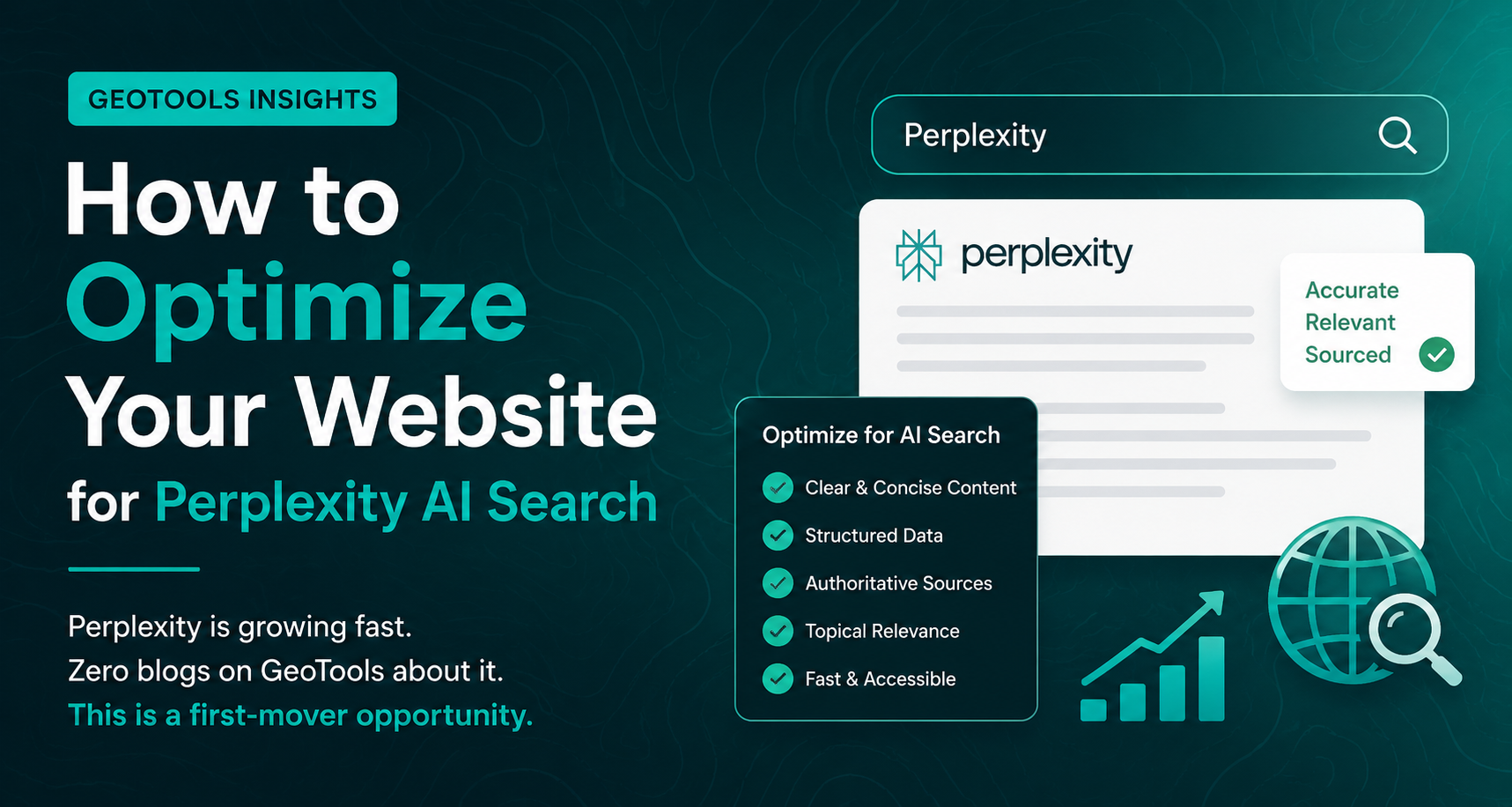
- Monitor AI visibility in Perplexity and Gemini.
Frequently Asked Questions
Is SEO still relevant in 2026?
Absolutely. It has evolved to include AI-powered platforms alongside traditional search.
What is AEO?
AEO (Answer Engine Optimization) is the practice of optimizing content to be featured in AI-generated answers.
Conclusion
The search landscape rewards brands that are authoritative and built for both humans and AI systems. Start with the checklist above and execute well.